A rain garden is a shallow, landscaped depression that captures stormwater runoff and lets it soak naturally into the ground. Think of it as a beautiful, living sponge in your yard. Rain gardens reduce flooding, filter pollutants, recharge groundwater, and provide habitat for pollinators. Best of all, they look great once established and require minimal maintenance.
If you have a downspout that dumps water into a soggy patch, a driveway that sheets water across your lawn, or you simply want to do something positive for your local watershed, a rain garden might be the perfect project for you.
How a Rain Garden Works
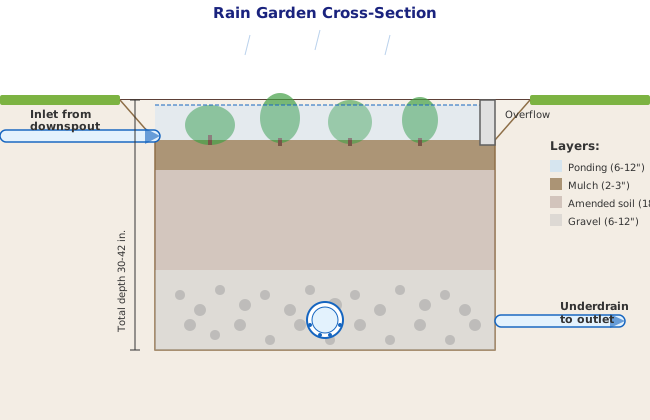
Rain gardens work by collecting runoff in a bowl-shaped depression filled with specially selected soil and plants. The garden is typically 4 to 8 inches deep and is designed to drain within 24 to 48 hours after a rain event. This is important because standing water that lasts longer than 48 hours can breed mosquitoes and drown many garden plants.
The soil in a rain garden is engineered to drain well. A typical mix is 50 to 60 percent sand, 20 to 30 percent topsoil, and 10 to 20 percent compost. This mix drains much faster than native soil while still retaining enough nutrients for plant growth.
Water enters the garden from one or more inflow points, spreads across the bottom, and slowly percolates down through the soil mix. Along the way, the roots, soil microbes, and soil particles remove pollutants including nitrogen, phosphorus, heavy metals, and sediment.
Choosing the Right Location
Distance from the house. Position the rain garden at least 10 feet from your foundation and at least 25 feet from a septic drain field. You do not want infiltrated water to affect either system.
Downhill from a water source. The garden should be lower than the surface it is collecting runoff from. A downspout, driveway, patio, or lawn area can all feed into a rain garden.
Sun exposure. Most rain garden plants prefer full sun to partial shade (4 to 6 hours of direct sunlight). You can find shade-tolerant plant lists, but the selection is more limited.
Soil conditions. Do a simple percolation test: dig a hole 12 inches deep, fill it with water, let it drain, fill it again, and time how long it takes to drain the second time. If it drains in 12 to 24 hours, your soil is suitable. If it takes longer, you will need to amend the soil or add an underdrain.
Avoid utility lines. Call 811 before you dig, as always.
Sizing Your Rain Garden
The size of your rain garden depends on the area draining to it and your soil type. As a rule of thumb:
- Sandy soil: Rain garden should be 20 to 30 percent of the drainage area
- Loamy soil: Rain garden should be 30 to 40 percent of the drainage area
- Clay soil: Rain garden should be 40 to 60 percent of the drainage area
For example, if a 500-square-foot section of roof drains to the garden and you have loamy soil, you need a rain garden of about 150 to 200 square feet.
Use the Rain Garden Calculator for a precise sizing based on your specific conditions, including rainfall intensity and desired drainage time.
Step-by-Step Construction
Step 1: Outline the Shape
Use a garden hose or rope to lay out the shape of your rain garden. Kidney, oval, and crescent shapes look the most natural. Mark the outline with landscape paint.
Step 2: Excavate
Dig out the garden to a depth of 6 to 8 inches in the center. The sides should slope gently from the edge to the center. Save the topsoil for use in your soil mix or elsewhere in the yard. Create a flat bottom to distribute water evenly.
Step 3: Create an Inlet and Overflow
Build a shallow channel or use a downspout extension to direct water into the garden. On the opposite side, create an overflow area at the garden surface level where excess water can escape during extreme storms without causing erosion.
Step 4: Amend the Soil
If your native soil drains slowly, remove the bottom 12 inches and replace it with the rain garden soil mix (50 percent sand, 30 percent topsoil, 20 percent compost). This ensures adequate drainage.
Step 5: Plant
Choose native plants that tolerate both wet and dry conditions (rain gardens alternate between these extremes). Plant densely to prevent weeds. Good choices vary by region, but common rain garden plants include:
Wet zone (center): Blue flag iris, cardinal flower, swamp milkweed, soft rush Middle zone: Black-eyed Susan, New England aster, switchgrass, joe-pye weed Dry zone (edges): Little bluestem, butterfly weed, purple coneflower, wild bergamot
Step 6: Mulch
Apply 2 to 3 inches of shredded hardwood mulch. Avoid dyed mulch and stone mulch, which do not add organic matter to the soil. Do not use fine mulch that will float away during the first rain.
Step 7: Water and Establish
Water your rain garden regularly for the first growing season, just like any new garden. Once established, rain garden plants are drought-tolerant and require no supplemental watering.
Maintenance Calendar
Spring: Remove dead plant material from the previous year. Add fresh mulch. Check for erosion at the inlet and overflow points.
Summer: Weed as needed (less and less each year as plants fill in). Water during extended dry spells only during the first year.
Fall: Leave standing plant material for winter interest and wildlife habitat. Cut back in late winter or early spring.
Ongoing: Inspect after heavy rains to make sure water is draining within 48 hours. If it is not, the soil may be compacted. Loosen the surface with a garden fork.
Cost Estimate
| Item | Cost for 200 sq ft Garden |
|---|---|
| Excavation (DIY) | Free (your labor) |
| Soil amendment | $200-400 |
| Plants (native perennials) | $300-600 |
| Mulch | $50-100 |
| Inlet/overflow materials | $50-100 |
| Total DIY | $600-1,200 |
| Total Professional | $2,000-5,000 |
Common Mistakes
Making it too small. An undersized rain garden overflows frequently, defeating the purpose. Use the calculator, do not just guess.
Planting the wrong species. Avoid plants that cannot handle periodic flooding or drought. Stick to proven rain garden species native to your region.
Forgetting the overflow. Every rain garden needs an overflow point for extreme storms. Without one, water will find its own path, often causing erosion.
Building it too close to the house. Keep at least 10 feet of separation from any foundation.
When to Call a Professional
- You have heavy clay soil that requires an underdrain (perforated pipe beneath the garden)
- The rain garden needs to handle more than 1,000 square feet of drainage area
- Your lot has significant slope and requires retaining walls or terracing
- You want a professional planting design with seasonal color and texture
Related Calculators
- Rain Garden Calculator — Size your rain garden precisely
- Rational Method Calculator — Estimate peak runoff from your drainage area
- Runoff Coefficient Calculator — Determine your site’s runoff characteristics