If you walk outside after a rain and your shoes immediately sink into mud, or if you notice standing water in your yard hours or even days after a storm, you are not alone. Wet, soggy yards are one of the most common complaints homeowners have, and the good news is that the problem is almost always solvable. The bad news is that ignoring it only makes things worse.
This guide will help you figure out why your yard is wet, which solutions might work for your situation, and when you can tackle it yourself versus when you need professional help.
Why Does Water Pool in My Yard?
Water follows gravity. It flows downhill and collects in low spots. When your yard stays wet, it means one of three things is happening: water is arriving faster than the soil can absorb it, the soil itself cannot absorb water well, or the grading of your land is directing water into areas where it gets trapped.
Understanding which of these is causing your problem is the first step toward fixing it.
Common Causes of a Wet Yard
Poor grading or flat terrain. Your yard should slope away from your house at a minimum grade of about 2 percent, which works out to roughly a quarter inch per foot. If your yard is flat or slopes toward your house, water has nowhere to go. Over time, soil settlement near the foundation can reverse the original grading, creating low spots that collect water.
Heavy clay soil. Clay soil is extremely dense and absorbs water very slowly. If you can pick up a handful of soil from your yard, squeeze it into a ball, and it holds its shape, you likely have clay. Clay drains at rates as low as 0.06 inches per hour, which means a one-inch rain could take more than 16 hours to soak in.
High water table. In some areas, the natural groundwater level sits close to the surface, especially in spring or after prolonged wet weather. If your yard is wet even when it has not rained recently, a high water table could be the cause.
Compacted soil. New construction, heavy foot traffic, or equipment driving over your yard compresses the soil particles together, eliminating the air spaces that normally allow water to percolate downward. This is extremely common in new-build homes where construction equipment has packed the soil.
Impervious surfaces directing runoff. Your roof, driveway, patio, and sidewalks do not absorb any water. All that runoff has to go somewhere. If your downspouts dump water right next to your foundation, or if your driveway slopes toward your yard, you are adding a lot of extra water to an area that may not be able to handle it.
Broken or clogged pipes. If your property has underground drainage pipes from a previous installation, they may be cracked, crushed, or clogged with roots and sediment. A system that worked ten years ago may be completely nonfunctional today.
How to Diagnose Your Drainage Problem
Before you spend money on solutions, take some time to observe what is actually happening. Here is a simple diagnostic process:
Watch during a rain. Go outside during a moderate rainstorm (wear boots) and observe where water flows, where it pools, and where it enters and leaves your property. Take photos or video. This ten-minute exercise is worth more than any amount of guessing.
Do a soil test. Dig a hole about 12 inches deep and 12 inches wide. Fill it with water and let it drain completely. Fill it again and time how long it takes to drain. If it takes more than 4 hours, you have a drainage problem related to soil permeability.
Check your grading. Place a 4-foot level on the ground near your foundation, with one end touching the house. The bubble should indicate a slope away from the house. If it slopes toward the house, or is perfectly level, that is part of your problem.
Inspect your downspouts. Walk around your house and check where each downspout discharges. If water is landing within 4 feet of your foundation, it needs to be redirected.
Solutions That Actually Work
Solution 1: Regrade Your Yard
Best for: Flat yards or areas that slope toward the house. Cost: $500 to $3,000 for a typical residential yard. Difficulty: Moderate DIY, but large areas need equipment.
Sometimes the simplest solution is the best one. Adding topsoil to create a proper slope away from your house can solve many drainage problems. The target is a 2 percent grade minimum, which means the ground drops 2 inches for every 10 feet of horizontal distance.
For small areas near the foundation, this is a straightforward DIY project. For larger yards, you may need a skid-steer and a few loads of fill dirt.
Solution 2: Install a French Drain
Best for: Areas where water pools consistently, intercepting subsurface water, redirecting water around structures. Cost: $15 to $30 per linear foot installed professionally; $8 to $15 per foot DIY. Difficulty: Moderate to hard DIY (lots of digging).
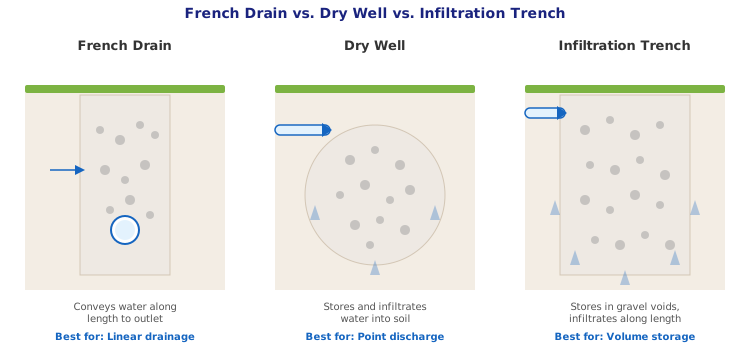
A French drain is a gravel-filled trench with a perforated pipe at the bottom. Water seeps into the trench, enters the pipe through the perforations, and flows by gravity to a discharge point (like a storm drain, dry well, or daylight outlet at a lower elevation).
French drains are one of the most effective drainage solutions for residential properties. They work for both surface water and shallow groundwater interception.
Use our French Drain Calculator to size your drainSolution 3: Extend Your Downspouts
Best for: Wet areas near the foundation caused by roof runoff. Cost: $10 to $50 per downspout (DIY). Difficulty: Easy DIY.
If your downspouts discharge within a few feet of your foundation, extending them is the cheapest and easiest fix you can make. Underground extensions with pop-up emitters are the cleanest-looking option and discharge water 10 to 15 feet from the house.
Use our Downspout Sizing Calculator to check your downspout capacitySolution 4: Build a Rain Garden
Best for: Managing roof runoff in an attractive, low-maintenance way; improving water quality. Cost: $3 to $12 per square foot. Difficulty: Moderate DIY.
A rain garden is a shallow, planted depression designed to capture and absorb runoff. They typically drain within 24 to 48 hours and are planted with native species that tolerate both wet and dry conditions. Rain gardens are an excellent choice when you want an attractive solution that also benefits the environment.
Use our Rain Garden Calculator to determine the right sizeSolution 5: Install a Dry Well
Best for: Properties where there is no storm drain or lower discharge point available. Cost: $1,500 to $3,000 installed; $500 to $1,000 DIY. Difficulty: Moderate DIY.
A dry well is an underground chamber filled with gravel or a prefabricated plastic structure that collects water and lets it slowly infiltrate into the surrounding soil. It is a good option when you do not have a storm drain nearby or a lower area where you can discharge a French drain.
Use our Dry Well Calculator to size your installationSolution 6: Install a Catch Basin
Best for: Low spots where water pools at the surface, areas where you need to collect and redirect water. Cost: $200 to $500 per basin installed. Difficulty: Moderate DIY.
A catch basin is a buried box with a grated top that collects surface water and routes it through an underground pipe. It is the solution of choice for specific low spots in driveways, patios, or yard areas where water consistently pools.
Use our Catch Basin Calculator to select the right sizeHow to Get Started
- Observe and diagnose. Spend one rainy day watching where water goes on your property. Take photos.
- Check the easy fixes first. Extend downspouts and correct any obvious grading issues near the foundation.
- Estimate the runoff. Use the Rational Method Calculator to figure out how much water your drainage area produces.
- Size your solution. Use the appropriate calculator for your chosen solution to determine pipe sizes, trench dimensions, or basin sizes.
- Plan your discharge point. Every drainage system needs somewhere to send the water. Identify storm drains, natural waterways, or areas where infiltration is practical.
When to Call a Professional
While many drainage solutions are within reach of a handy homeowner, certain situations call for professional help:
- Water entering your basement or crawl space. Foundation waterproofing and structural drainage require expert knowledge and specialized materials.
- Drainage affecting multiple properties. If water from your neighbor’s property is flooding yours, or if your solution might redirect water onto someone else’s property, you need a professional who understands local drainage easements and regulations.
- Large volumes of water. If you are dealing with more than half an acre of drainage area, the flows involved may be larger than typical DIY solutions can handle safely.
- Proximity to utilities. Always call 811 before digging. If your drainage project is near water, sewer, gas, or electric lines, hire a professional who has experience working around utilities.
- Permits required. Many municipalities require permits for grading changes or connections to storm drain systems. A professional will know the local requirements.
- Septic system proximity. If you have a septic system, routing additional water near the drain field can cause it to fail. A professional can ensure your drainage solution does not interfere with your septic system.
Related Calculators
Use these free tools to size your drainage solution:
- French Drain Calculator — Size gravel trenches and perforated pipe
- Rational Method Calculator — Estimate peak runoff from your drainage area
- Catch Basin Calculator — Size storm water inlets
- Rain Garden Calculator — Design a rain garden
- Dry Well Calculator — Size underground infiltration chambers